How Cooling Systems Fail, and the Warning Signs That Come Before the Temperature Gauge Moves
The gauge is the last warning, not the first. A cooling system usually gives smaller signals well before it actually overheats.
September 10, 2026 · 4 min read
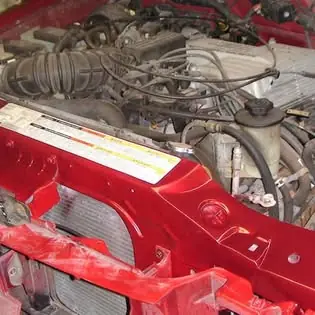
Most drivers find out about a cooling system problem the same way: the temperature gauge starts climbing, sometimes with steam under the hood, usually at the worst possible moment. But a cooling system rarely fails all at once. It's a sealed system with several parts working together, a radiator, a water pump, hoses, a thermostat, and a fan, and by the time the gauge actually moves, something in that system has usually been degrading for a while.
Why radiators fail slowly, then all at once
A radiator's job is to move heat out of the coolant fast enough to keep the engine at a stable temperature. Over years, the fins that do that job corrode and clog with mineral deposits, especially once the coolant's corrosion inhibitors have worn out, which happens on a schedule whether or not the car looks fine. A radiator with reduced airflow through it doesn't fail on day one. It just gets a little less effective every month, until a hot afternoon drive or stop and go traffic finally asks more of it than it can deliver.
The small leak that becomes a big one
A slow coolant leak rarely announces itself with a puddle under the car right away. More often it shows up as a faint sweet smell, a coolant level that needs topping off more than it used to, or a thin white residue near a hose clamp or the water pump seal. Any of those is worth checking before it becomes an actual drop in coolant level, because a system running low doesn't cool as well even before it runs dry, and running an engine low on coolant is a fast way to turn a minor repair into a much bigger one.
What a thermostat sticking actually looks like
A thermostat that's starting to stick doesn't usually fail as a clean on or off. It shows up first as a temperature gauge that runs a little higher than normal on a hot day, or a heater that takes longer than it used to blow warm air, or a gauge that bounces instead of holding steady. Those are all small enough that most drivers explain them away. They're also exactly the kind of thing worth mentioning at a regular service, because catching a sticking thermostat early is a simple part swap, and catching it late, after it's caused overheating, can mean a damaged head gasket.
Coolant color and condition tell their own story
Coolant that's turned brown, rusty, or has visible particles in it is past its useful protective life, even if the level looks fine and the temperature gauge hasn't moved. Fresh coolant is usually a clear, bright color depending on the type used. Once it's discolored, the corrosion inhibitors that protect the radiator, water pump, and engine passages from the inside have likely broken down, and metal surfaces inside the system can start corroding even though nothing looks wrong from the outside. This is one of the easier things to catch at a routine service, and one of the more expensive things to ignore, since corrosion inside a cooling system tends to show up as a leak somewhere unexpected months later.
Why Kona's heat and hills work a cooling system harder
A cooling system in Kailua-Kona works harder than the same system would in a milder climate. Warm ambient temperatures mean the radiator has less of a head start cooling the coolant down, and the hills around town mean more time spent climbing at higher engine load, which generates more heat than flat, steady driving. None of that means a cooling system needs anything different from what the manufacturer specifies, but it does mean small inefficiencies, a radiator that's partly clogged, a fan that isn't running at full speed, tend to show up sooner here than they might somewhere cooler and flatter.
What to do if the gauge does start climbing
If the temperature gauge is actually climbing toward the red, the right move is to turn off the air conditioning, turn the heater on full blast to pull heat away from the engine, and get off the road as soon as it's safe. Continuing to drive on an overheating engine is what turns a radiator or hose repair into a warped head or a blown gasket, a much worse repair bill for the sake of another mile or two.
Ayers Automotive handles all radiator problems and cooling system maintenance for cars around Kailua-Kona, and they can usually spot a cooling system heading toward trouble before it actually overheats. If the gauge has been running a little warmer than usual, or the heater's not doing what it used to, call 808-327-1331 and get it checked before a normal drive turns into a tow.
Ayers Automotive, 808-327-1331
Call 808-327-1331More articles
What a Check Engine Light Actually Tells a Shop, and What It Doesn't
The light doesn't name the part that's broken. It names the symptom, and the difference matters for how much the fix ends up costing.
Factory Scheduled Maintenance at 30K, 60K, 90K, and 120K: What Each One Is Really For
Every interval targets a different set of parts wearing out on a different schedule. Skip one and you're not saving money, you're just moving the bill to a worse time.