What a Check Engine Light Actually Tells a Shop, and What It Doesn't
The light doesn't name the part that's broken. It names the symptom, and the difference matters for how much the fix ends up costing.
September 10, 2026 · 4 min read
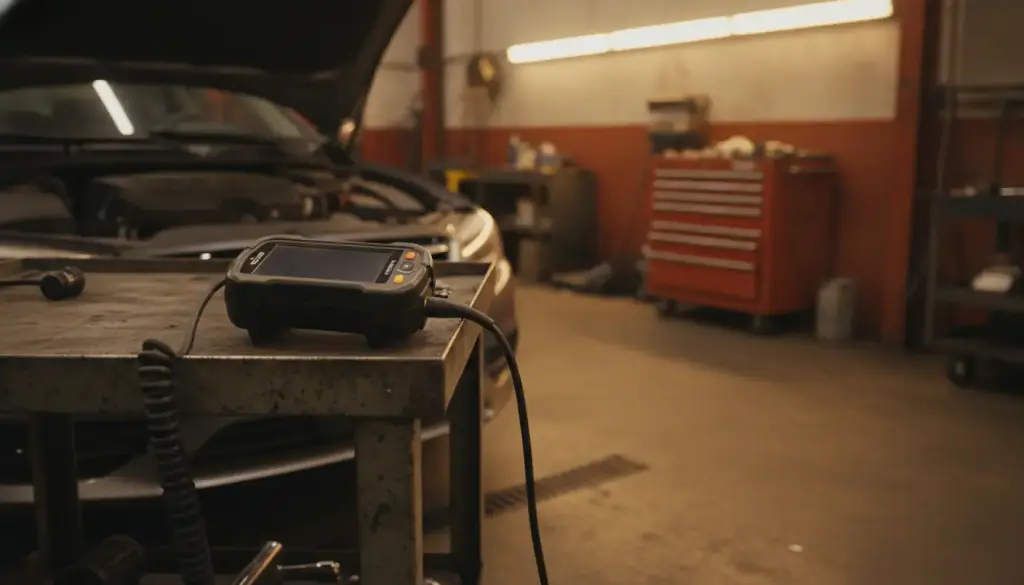
A check engine light coming on feels like bad news, but it isn't a diagnosis. It's a message from your car's onboard computer saying one of its sensors reported a reading outside the range it expects. That's all it means at the moment it lights up. Whether that reading points to something minor or something that needs attention today depends on what's actually happening under the hood, and that's the part a light on the dash can't tell you by itself.
A trouble code names a symptom, not a cause
When a shop pulls the code, it might read something like system running lean or misfire detected on cylinder two. That code is real and it's useful, but it describes a symptom the computer measured, not the reason for it. A lean running engine could mean a vacuum leak, a failing oxygen sensor, a clogged fuel injector, a cracked intake gasket, or a handful of other things. The code narrows down where to start looking. It doesn't hand over the answer.
Why the same code can mean two different repairs
Two cars can throw the identical code and need completely different work. One might have a loose gas cap, which is genuinely one of the more common causes of a check engine light and one of the cheapest to fix. Another car with the same code might have a failing sensor that's been degrading for months, or a vacuum hose that finally cracked from age and Kona's heat cycling the rubber. Guessing based on the code alone and swapping parts hoping one of them fixes it usually costs more than diagnosing it properly the first time, because now there's a part that didn't need replacing and the real problem is still there.
Clearing the light isn't the same as fixing the problem
Some shops and some parts stores will clear a stored code for free, and the light goes out immediately, which feels like the problem is solved. It isn't. Clearing a code just erases the record from the computer's memory. The condition that triggered it in the first place, a sensor reading out of range, a misfire, a fuel trim that's off, is still there. The light comes back once the same condition happens again, sometimes within a few miles, sometimes after a week when the exact same driving conditions repeat. Resetting the light without addressing the underlying issue also erases the freeze frame data that would have helped find it faster, so if it's cleared before a real diagnosis, that same information has to build back up again before a shop can read it a second time.
It's not always the expensive part you'd guess
Drivers often assume a check engine light means a major engine or transmission problem, and sometimes it does, but plenty of the most common triggers are minor. A loose or worn gas cap seal, a single oxygen sensor past its useful life, or a mass airflow sensor that's picked up some dirt are all common causes and none of them require tearing into the engine. The only way to know which situation applies is to actually read the code and test the components behind it, rather than assuming the worst or assuming the best.
Steady light or flashing light: this difference matters
A steady check engine light means something is off and worth getting looked at soon, but it's generally safe to keep driving carefully in the meantime. A flashing check engine light is a different situation. That usually means the engine is misfiring badly enough that unburned fuel is being dumped into the exhaust system, where it can overheat and damage the catalytic converter, which is one of the more expensive parts on a car to replace. If the light is flashing, the safer move is to pull over and have the car towed rather than keep driving on it.
What actually happens once it's on the lift
A real diagnosis starts with pulling the stored codes, but it doesn't stop there. A good technician also looks at the freeze frame data, which records what the engine was doing the moment the code triggered: speed, load, temperature, fuel trim. That context often points straight at the cause. From there it's testing the actual components, a sensor, a coil, a line, rather than replacing parts on a hunch. Once the repair is done, the car goes back on the scanner to confirm the underlying issue is actually resolved and not just that the light happened to clear.
Ayers Automotive runs full computerized diagnostics and check engine light analysis on most makes and models, foreign or domestic, right here in Kailua-Kona. If the light's on and you'd rather know what it actually means before spending money guessing, call 808-327-1331 and get it looked at properly.
Ayers Automotive, 808-327-1331
Call 808-327-1331More articles
Factory Scheduled Maintenance at 30K, 60K, 90K, and 120K: What Each One Is Really For
Every interval targets a different set of parts wearing out on a different schedule. Skip one and you're not saving money, you're just moving the bill to a worse time.
How Cooling Systems Fail, and the Warning Signs That Come Before the Temperature Gauge Moves
The gauge is the last warning, not the first. A cooling system usually gives smaller signals well before it actually overheats.