Brakes: How to Tell Normal Wear Noise From Something That Needs the Car on a Lift Now
A squeal isn't always an emergency and a grinding sound never isn't one. Here's how to tell which noise you're actually hearing.
September 10, 2026 · 3 min read
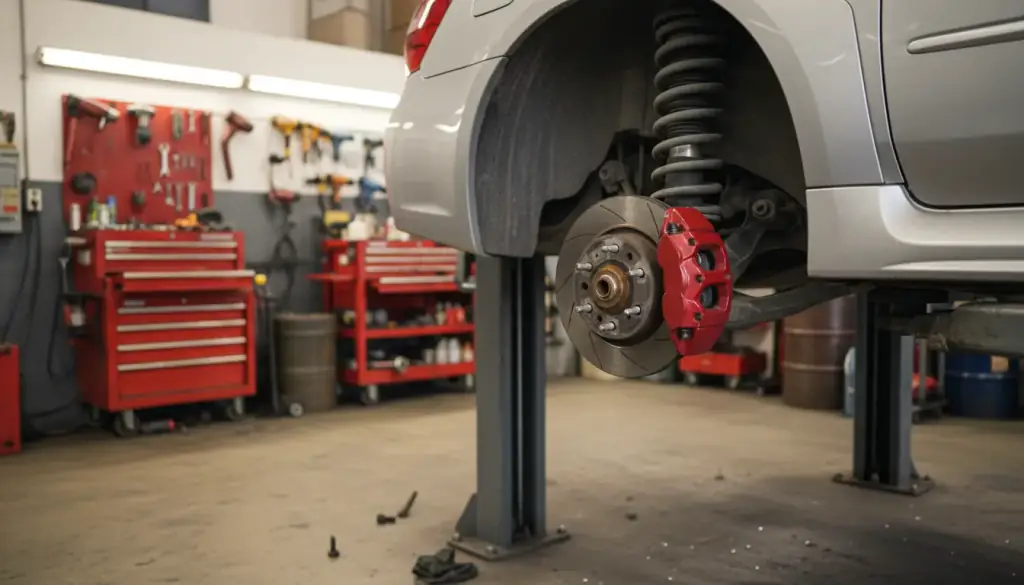
Brakes make noise as part of how they're built to work, so not every sound coming from that corner of the car means something's wrong. But some of those sounds are the brake system telling you it needs attention now, not next month. Knowing the difference saves both an unnecessary trip to the shop and, more importantly, the kind of delay that turns a routine pad replacement into a rotor or caliper repair.
The thin metallic squeal: usually just a wear indicator
Most brake pads have a small metal tab built into them called a wear indicator. Once the pad material wears down to a certain thickness, that tab starts touching the rotor and makes a light, high pitched squeal, usually when braking gently at low speed and often going quiet under harder braking. That sound is doing exactly what it's designed to do: telling you the pads are getting thin and it's time to have them looked at. It's not an emergency, but it's not something to ignore for months either, since the tab is there specifically because pad wear isn't otherwise easy to notice from the driver's seat.
The grinding sound: pads are already gone
A grinding or scraping sound, especially one that changes with speed and doesn't let up, usually means the pad material is completely worn through and metal is now contacting metal, backing plate against rotor. This is not a wait and see sound. Driving on it damages the rotor, which turns a pad replacement into a pad and rotor replacement, and it also means the brakes are working with less stopping power than they should have, right when you need it most.
Why ignoring brake noise costs more than fixing it early
Brake pads are designed to be the part that wears out first, specifically because they're far cheaper to replace than the rotors and calipers they protect. Once pad material is gone and metal starts contacting the rotor, the rotor surface gets scored and usually needs to be replaced or resurfaced instead of just cleaned up. Push it further and the caliper itself can get damaged from the uneven pressure and heat. What would have been a pad replacement at the first sign of the wear indicator squeal turns into pads, rotors, and sometimes a caliper, all because the noise got ignored for a few thousand extra miles.
What driving style does to brake wear
How a car gets driven changes how fast brakes wear, which is part of why two similar cars in Kailua-Kona can need brake work at very different mileages. Frequent stop and go traffic wears pads faster than steady highway driving. Riding the brakes on a long downhill grade instead of using engine braking generates more heat than a quick stop from a normal speed, and that heat is part of what causes warped rotors and glazed pads over time. None of this means driving has to change, but it's part of why a brake inspection is worth doing on a schedule rather than only after a noise shows up.
A pulsing pedal or a car that pulls to one side
A brake pedal that pulses under normal braking usually points to a warped rotor, often from heat buildup, uneven pad wear, or repeated hard stops on the way down from somewhere like the Kona hillsides. A car that pulls noticeably to one side when braking is a different issue, sometimes a stuck caliper, sometimes uneven wear between the two front brakes. Either one is worth getting looked at soon, since both affect how predictably the car stops, especially in wet conditions or at higher speed.
When it needs the car on a lift today, not this week
A few situations are worth treating as urgent rather than routine: a brake pedal that feels soft or sinks toward the floor, a grinding sound that's new and getting worse, a burning smell after normal driving, or a pedal that suddenly needs a lot more pressure than usual to stop the car. Any of those points to something affecting how well the brakes actually work right now, not just how long they'll last, and that's worth a same day look rather than waiting for a scheduled appointment.
Ayers Automotive handles brake work for cars around Kailua-Kona, from routine pad replacement to diagnosing a noise that doesn't sound right. If something about your brakes has you second guessing, it's worth a call to 808-327-1331 before you find out the hard way what the sound actually meant.
Ayers Automotive, 808-327-1331
Call 808-327-1331More articles
What a Check Engine Light Actually Tells a Shop, and What It Doesn't
The light doesn't name the part that's broken. It names the symptom, and the difference matters for how much the fix ends up costing.
Factory Scheduled Maintenance at 30K, 60K, 90K, and 120K: What Each One Is Really For
Every interval targets a different set of parts wearing out on a different schedule. Skip one and you're not saving money, you're just moving the bill to a worse time.